
TwoBlue · Sense
Labrador. The sensing system.
Detection, fusion and tracking at the edge, on every platform.
Capabilities
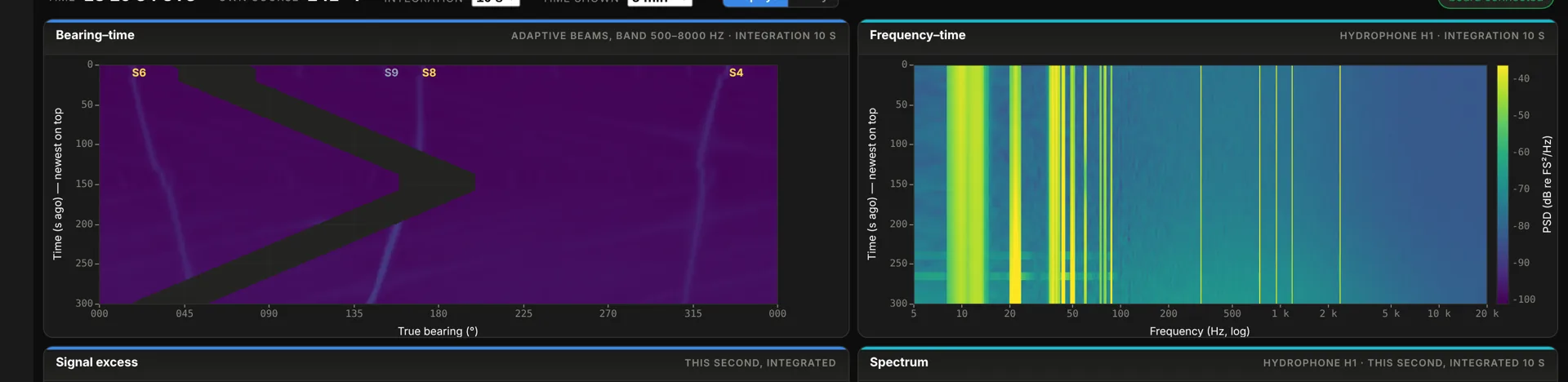
One picture from every sense.
Acoustic
Direction finding and 3D localisation from hydrophone arrays.
Optical
A vessel’s range, bearing and heading from a single image.
Magnetic
Anomaly detection and mapping where acoustics struggle.
Fusion with any source
Radar, AIS, GPS and other feeds combined; works on passive sensing alone.
Emulators
Design the array before you build it.
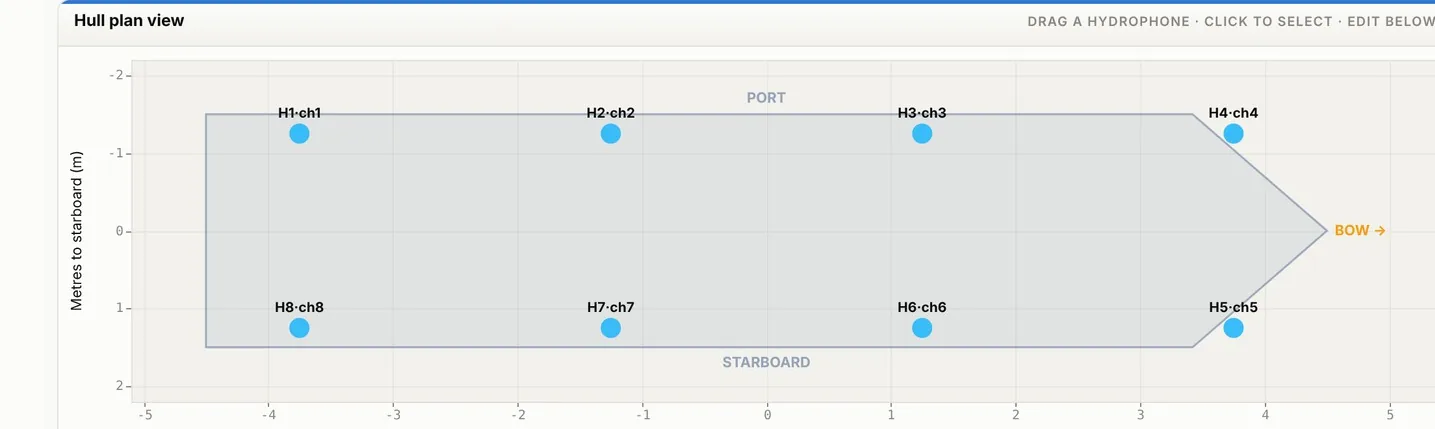
Labrador Array Emulator
Plan where hydrophones and arrays go on a hull or the seabed, and see the effect before installation.
Labrador Array Performance Emulator
Test how an array design performs, from bearings and detection to tracking, before building it.
Passive ranging
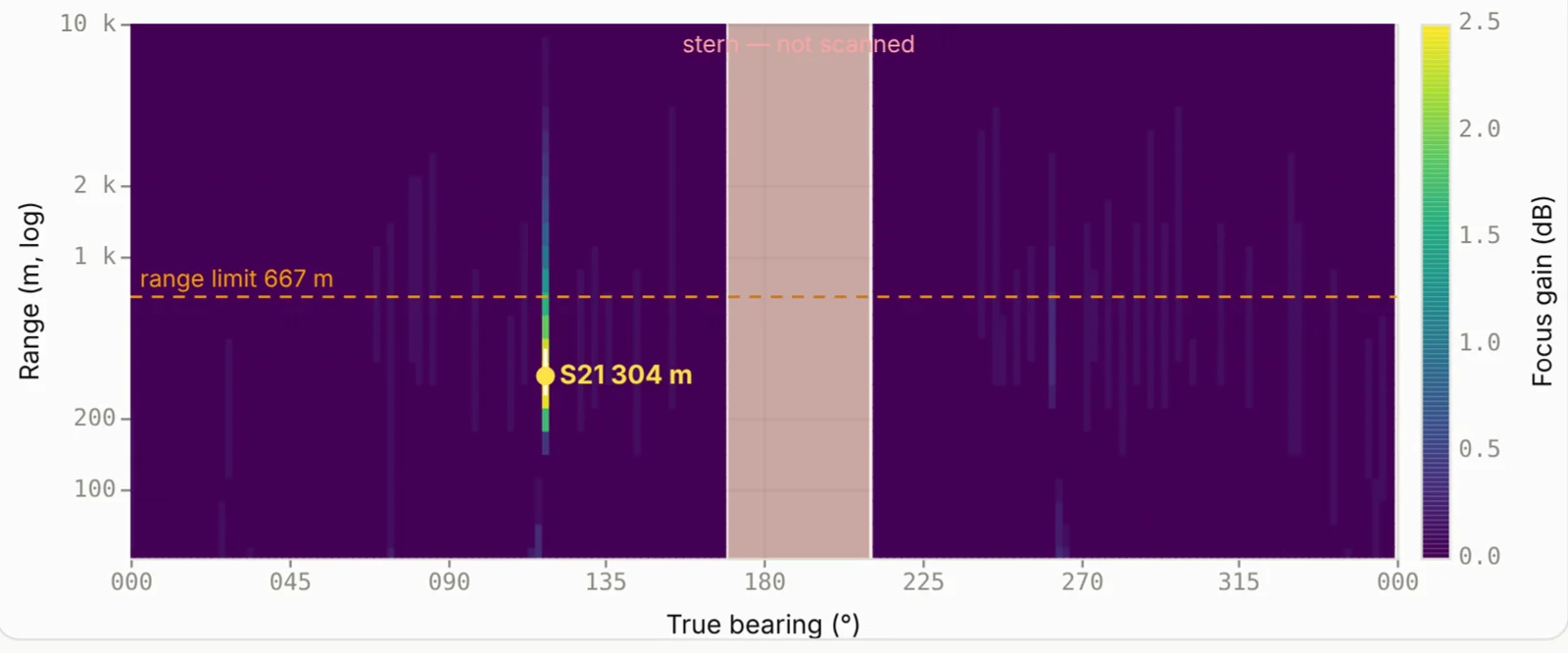
Range without a ping.
Labrador estimates range from the array alone, with no active transmission, and marks the fix on the range-bearing display.

Automatic DEMON classification
Who is out there.
Labrador picks out a ship’s propeller in its noise: shaft rate, blade count and an estimated speed, then classifies the vessel with a stated confidence.
Features
What Labrador does.
Sensor data fusion
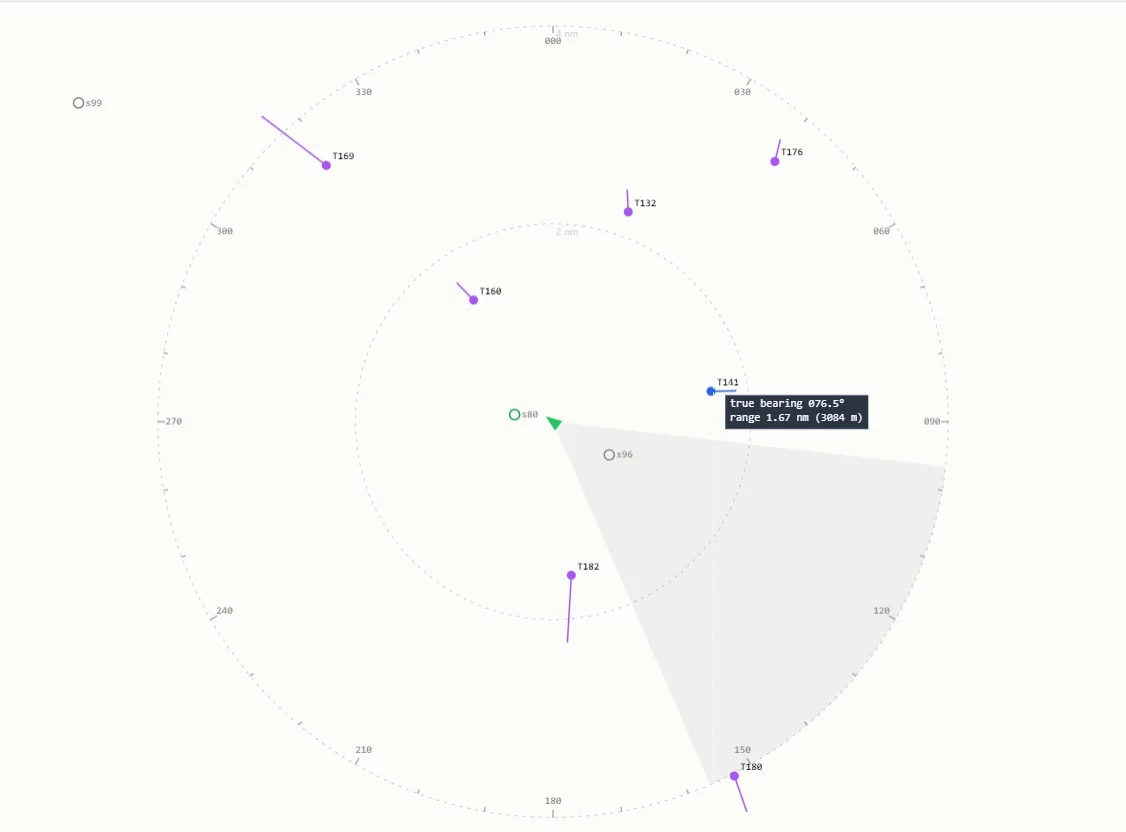
Radar, AIS, acoustic, magnetic, optical and other feeds fused into one contact picture.
Edge computing
Processing on board, next to the sensor, so only contacts and tracks need to go home.
Target motion analysis
Up to 99 contacts in one picture, and bearings-only passive TMA on up to ten at once: course, speed, range, CPA and TCPA.
Simulations and emulations
Array Placement and Array Performance emulators test sensor layouts and designs before installation.
Use cases
Where Labrador is used.
Harbour approach watch
Bearings, passive range and classification, fused with radar and AIS into one track.
Passive sensor barrier
Hydrophone arrays hold up to ten contacts with no active transmission.
Cable and seabed survey
Magnetic anomaly maps along a route, where acoustics are degraded.
Vessel noise monitoring
Automatic DEMON classification of passing ships, with a stated confidence.
Illustrative animations, not recordings of real missions.
Illustrative scenario
One faint engine at night
Off a harbour at night, a Labrador-equipped Trident hears a faint engine. The array gives a bearing and a passive range estimate; automatic DEMON classification counts five propeller blades and calls it a fishing vessel; AIS shows no ship there; a shore radar confirms the range. Labrador fuses it all into one track and hands it to Trident and Poseidon.
Works with
Part of TwoBlue.
Brochure
Labrador in three pages: features, use cases and screens.
On board Trident and Zeus. Sends contacts to the vehicle and to Poseidon. Design its arrays first in the Labrador emulators.
See Labrador with your sensors.
Ours or yours: tell us what you have.
Privacy first. This website does not track you: no analytics, no advertising or tracking cookies, no visitor recording. We only see what you choose to send us.